What's The Big News?
Hyundai is finally preparing to throw a fresh punch into India's red-hot compact crossover market. If you've been watching Maruti Suzuki print money with the Fronx, you already know why the South Korean giant is making this move. Enter the Hyundai Bayon — a slick, sharp-looking crossover that's already turning heads across European roads. It isn't just another raised hatchback with plastic cladding slapped onto the sides. Hyundai wants to give budget-conscious buyers a taste of high-tech features, active safety, and ultra-frugal running costs right out of the showroom.
Word on the street suggests Hyundai is tailoring this international crossover specifically for Indian tastebuds. That means you can expect intelligent driver assistance features, high-tech infotainment setup, and yes, a factory-fitted CNG option to keep your daily fuel bills down. For anyone sitting on the fence about buying a high-spec i20 or a sub-4-meter SUV, this upcoming model might just end up being the sweet spot you've been waiting for.
Hyundai's Answer To The Crossover Craze: Design & Platform
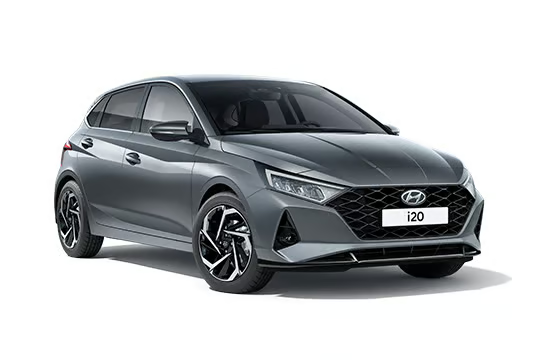
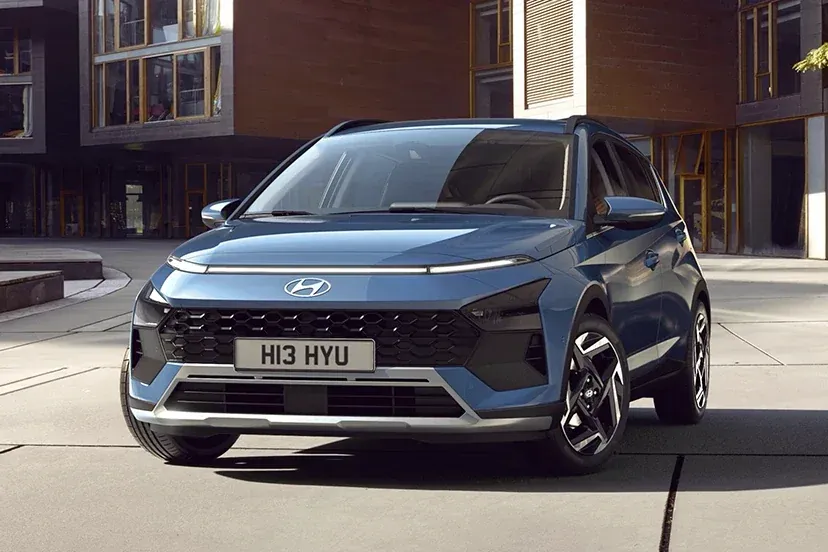
Let's talk design because that's usually where Hyundai plays its trump card. The Bayon shares its basic underpinnings with the Hyundai i20 platform, but you wouldn't guess it at first glance. Up front, you get that bold, futuristic parametric grille flanked by thin arrow-shaped LED daytime running lights sitting high on the nose. The main headlights are positioned lower down on the bumper, giving it an aggressive stance that's hard to miss. It looks sharp, distinctive, and surprisingly premium for its segment.
Move to the side profile and you'll spot heavy character lines, prominent wheel arches, and a sloped roofline that gives it a coupé-like silhouette. It's noticeably taller and longer than a standard hatchback, offering that extra bit of road presence Indian buyers crave. Rounding off the rear are arrow-shaped LED taillights connected by a thin light strip, a design cue that's currently all the rage across Hyundai's global lineup. (And honestly, it looks way better in person than in pictures.) If Hyundai retains this bold styling for our market, it's going to make a lot of current compact SUVs look dated overnight.
CNG Tech, ADAS, And A Cabin Loaded To The Brim
Step inside, and if you've sat in a modern i20, things will feel instantly familiar. You get a clean, horizontal dashboard layout with crisp digital screens dominating the center console. The highlight here is definitely the twin-screen setup — a fully digital instrument cluster for the driver alongside a large touchscreen infotainment system. Android Auto and Apple CarPlay support are standard naturally, along with Hyundai's BlueLink connected car tech. You'll also get ambient lighting, wireless charging, automatic climate control, and a premium audio setup on top-spec variants.
Where Hyundai really wants to beat the competition is in the technology department. The Bayon is expected to pack Level-1 or Level-2 ADAS features like forward collision warning, lane keep assist, and driver attention warnings. That's a massive deal for a car in this segment. On the powertrain front, Hyundai is likely offering its proven 1.2-litre naturally aspirated petrol engine alongside a punchy 1.0-litre turbo-petrol motor. But the real game-changer for Indian families will be the option of Hyundai's twin-cylinder factory-fitted CNG setup. You get the thriftiness of CNG without sacrificing your entire boot space for a massive gas tank. It's a win-win for city dwellers.
Specs At A Glance
Here is what we know so far regarding the expected specifications of the Hyundai Bayon for the Indian market:
Feature / Spec | Details (Expected / Known) |
|---|---|
Engine Options | 1.2L Kappa Petrol / 1.0L Turbo Petrol / 1.2L Bi-Fuel CNG |
Transmission Options | 5-Speed Manual, 6-Speed iMT, 7-Speed DCT |
Platform | Hyundai K2 Platform (Shared with i20) |
Safety Features | 6 Airbags, ABS with EBD, ESC, ADAS (Expected) |
Infotainment | 10.25-inch Touchscreen with Wireless Android Auto / Apple CarPlay |
Fuel Efficiency | Petrol: 18–20 kmpl (Expected) / CNG: 26+ km/kg (Expected) |
How Does It Stack Up Against The Competition?
When the Bayon lands in Indian showrooms, its primary target will be firmly locked on the Maruti Suzuki Fronx and the Toyota Taisor. Maruti has had a free run in the urban crossover segment with the Fronx selling like hot cakes. But Hyundai's entry will give buyers a far more feature-packed alternative. While the Fronx relies on simple, proven mechanicals, the Bayon is set to counter with superior interior fit and finish, advanced ADAS tech, and better high-speed composure.
Then there are micro-SUVs like the Tata Punch and Hyundai's own Exter. While the Exter serves budget-conscious buyers, the Bayon will position itself slightly higher up the ladder, targeting those who want a bigger car feel without paying proper mid-size SUV money. Compared to the Tata Punch, the Bayon will feel significantly more refined, featuring smoother powertrains and a far more sophisticated infotainment experience. If Hyundai prices it right, it could pull customers away from both premium hatchbacks and entry-level sub-compact SUVs.
The Good And The Not-So-Good
What We Like
- Futuristic and distinctive European design that stands out from regular hatchbacks
- Feature-rich interior with dual digital displays and connected car technology
- Safety boost with expected ADAS integration and six airbags as standard
- Twin-cylinder CNG option offers great fuel economy without killing boot space
What Could Be Better
- Rear seat space might feel tight for three adults on long highway trips
- Lower variants might miss out on the punchy turbo-petrol engine
- Pricing could overlap with lower variants of the Creta and Venue
Price & When You Can Buy It
Hyundai hasn't officially locked in the exact launch date or final prices yet, but industry whispers point toward a launch later this year or early next year. We expect Hyundai to price the Bayon somewhere between ₹7.5 lakh and ₹11.5 lakh (ex-showroom). That puts it right in the sweet spot between the Exter and the Venue, giving Hyundai an ironclad lineup across every single price bracket under ₹15 lakh.
Our Verdict
Here's the thing — Indian car buyers don't just want sensible transport anymore; they want tech, style, and low running costs rolled into one stylish package. The Bayon looks ready to check every single box on that wishlist. If Hyundai delivers on its promise of high safety standards, packed features, and a usable CNG boot setup, Maruti Suzuki is going to have a serious fight on its hands. We can't wait to get our hands on the steering wheel for a proper road test once it hits the asphalt.