What's The Big News?
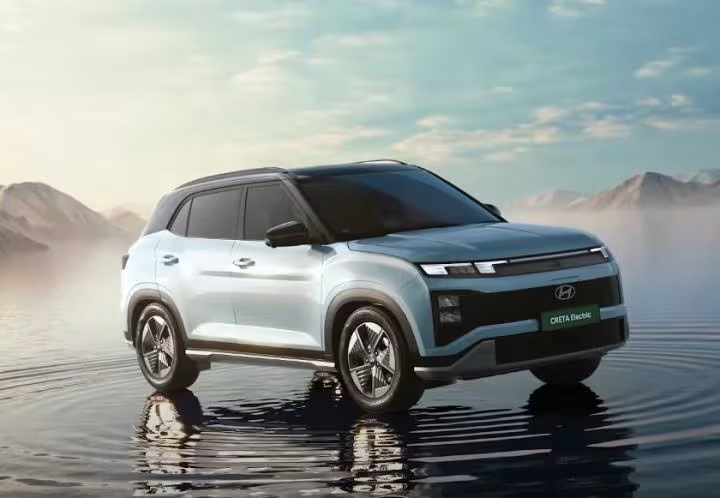
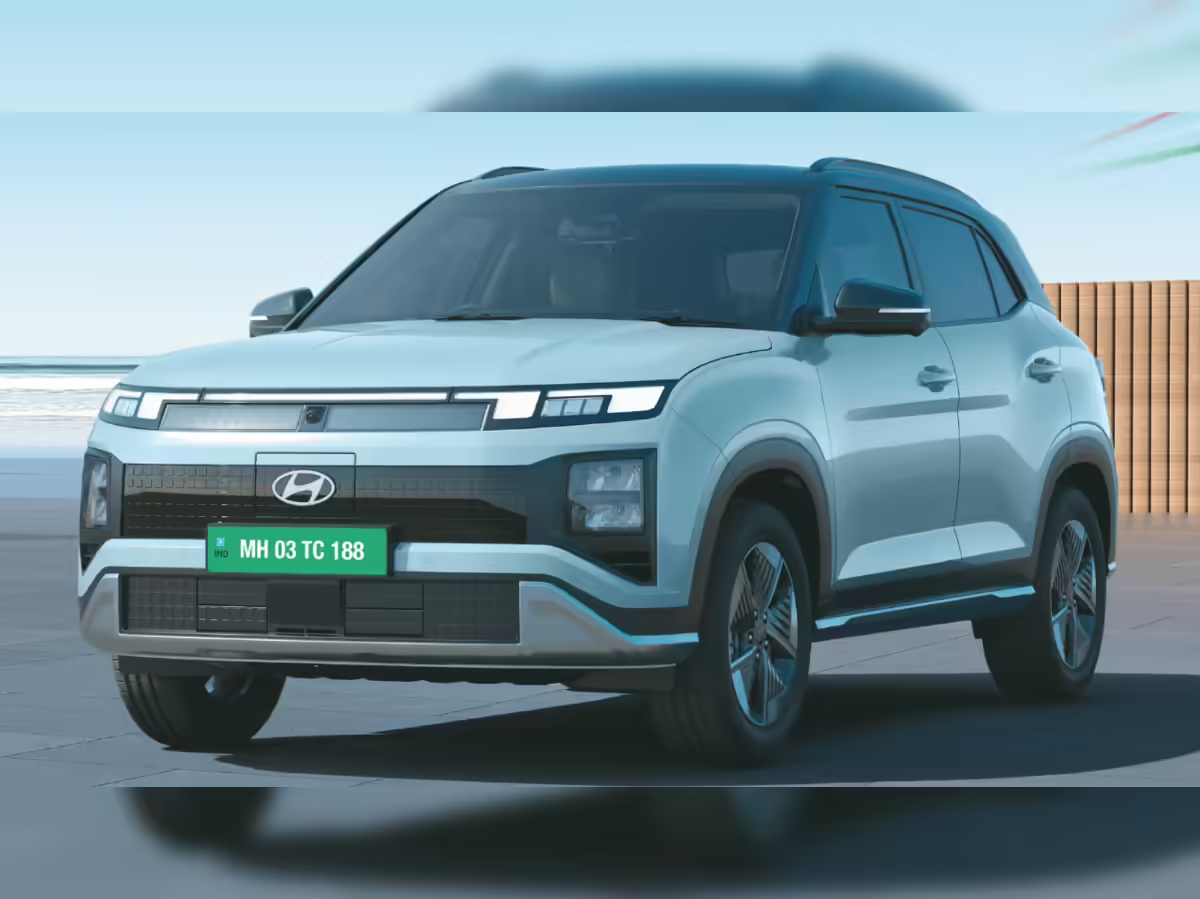
Alright folks, listen up! This is big. Hyundai, a brand synonymous with reliability and features in India, is finally making a serious play for the mass-market electric vehicle segment. We're hearing directly from industry sources that their first truly affordable EV for India is slated to roll out from their Chennai plant by 2026.
Now, this isn't just another fancy EV for the elite. We're talking about a homegrown, mass-produced electric car designed specifically for the Indian buyer – the one who's currently eyeing a tiago-ev">Tiago EV or a nexon-ev">Nexon EV. It's a clear signal that Hyundai is ready to go head-to-head in the affordable EV battleground, and honestly, it’s about time they did.
Hyundai's Mass-Market Strategy: Made in India, For India
Up until now, Hyundai's EV game in India has been a bit... premium, hasn't it? The Kona Electric, while a decent performer, was never meant for the masses. And the Ioniq 5, well, that's a luxury statement for sure. But this upcoming model changes the entire narrative. By committing to local production from their Chennai facility, Hyundai isn't just assembling cars; they're investing heavily in the 'Make in India' initiative for electric mobility.
Manufacturing locally brings down costs significantly. You skip those hefty import duties, streamline the supply chain, and can even tailor the vehicle specifically for our driving conditions and preferences. This move isn't just about launching an EV; it's about making a statement that they want a big slice of the growing Indian EV pie, not just the crumbs. They know the future here is electric, and it's also budget-conscious.
Why Chennai Matters: Localisation & Scale
Hyundai's Chennai plant isn't just any factory; it's a massive, well-established hub that's been churning out some of India's most popular cars for decades. They've got the infrastructure, the skilled workforce, and the experience to handle high-volume production. When you combine this with the "mass-market" tag, it screams scale. This isn't going to be a niche product; it's going to be something Hyundai expects to sell in big numbers, competing directly with the current market leaders.
Localisation doesn't stop at just the car assembly. It extends to sourcing components, including potentially battery packs or cells. If Hyundai manages to achieve a high level of local content, we could see some aggressive pricing strategies. Imagine a Hyundai EV, with their signature build quality and features, available for what you'd pay for a top-spec Swift or a mid-range Creta. That’s the dream, isn't it? And local production is the key to unlocking that.
Specs At A Glance
Look, specific details are under tight wraps right now, as you'd expect for a launch that's still a couple of years away. But here's what we know for sure, and what we can reasonably expect from a 'mass-market' offering from Hyundai.
Feature | Details |
|---|---|
Manufacturer | Hyundai Motor India |
Vehicle Type | Mass-Market Electric Vehicle |
Production Location | Chennai Plant, India |
Expected Launch Timeline | 2026 |
Expected Body Style | Likely a compact SUV or premium hatchback (Estimated) |
Expected Range | City-friendly, likely 250-350 km (Estimated, depending on battery variant) |
Expected Price Segment | Sub-₹15 lakh (Ex-showroom, Estimated) |
How Does It Stack Up Against The Competition?
Currently, the affordable EV space in India is largely dominated by Tata Motors with their Tiago EV and Nexon EV. Then you've got contenders like the MG Comet EV and the Citroen eC3. This new Hyundai EV will enter a market that's significantly more mature than it is today, but also more competitive. Hyundai's biggest advantage will be its brand reputation for quality, features, and an extensive service network.
A Hyundai EV, even a mass-market one, is expected to bring a higher perceived value in terms of interior finish, connectivity features, and overall refinement. While Tata has the head start, Hyundai has a knack for entering segments and quickly becoming a major player. We expect it to offer a compelling package of range, features, and safety that will challenge the incumbents directly. It won't just be about price; it'll be about the complete ownership experience, which Hyundai generally excels at.
The Good And The Not-So-Good
What We Like
- Hyundai's Proven Quality: Expect solid build, good fit-and-finish, which is often a step above competitors in this segment.
- Feature-Rich Experience: Hyundai doesn't usually skimp on features, even in their budget offerings. Expect a well-equipped cabin.
- Local Manufacturing: This could mean competitive pricing and quicker availability of spares (eventually).
- Strong Service Network: Hyundai has one of the best footprints across India, crucial for EV adoption.
- Targeting the Mass Market: Finally, a true EV for the everyday Indian family.
What Could Be Better
- Long Wait Time: 2026 is still a fair bit away. The market could change dramatically.
- Details are Scarce: We're still in the dark about specific specs, design, and actual pricing.
- Intense Competition: By 2026, rivals will likely have even more advanced and affordable EVs.
Price & When You Can Buy It
The only firm detail on timing is that this mass-market EV will be launched from the Chennai plant in 2026. So, you've got a couple of years to start saving up! As for pricing, while official figures are, of course, a long way off, we expect Hyundai to price it very aggressively to genuinely compete in the mass-market segment. We're talking an ex-showroom starting price likely in the sub-₹15 lakh bracket, potentially even challenging the higher variants of the Tiago EV and the mid-spec Nexon EV. Anything above that, and it wouldn't quite be "mass-market" in the current Indian context, would it?
Our Verdict
Here's the thing — this announcement from Hyundai isn't just another press release; it's a strategic declaration. They've watched the market, seen Tata's success, and now they're ready to jump into the fray with a product tailored for India. Their reputation for quality, design, and features, combined with local manufacturing, gives them a formidable weapon.
Honestly, this is the move we've been waiting for. A mainstream player like Hyundai bringing a well-rounded, locally-made EV to the masses can truly accelerate India's EV adoption. It's going to be a long wait till 2026, but if Hyundai delivers on its promise of an affordable, quality EV, it could very well be a game-changer for the Indian automotive landscape. We're cautiously optimistic, and definitely excited to see what they cook up in Chennai!