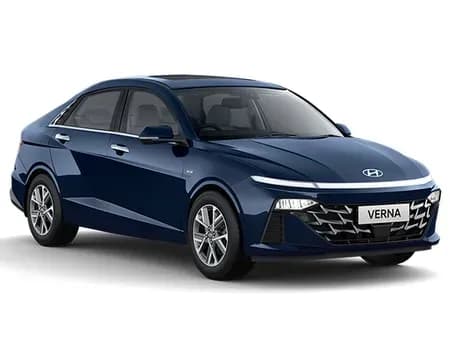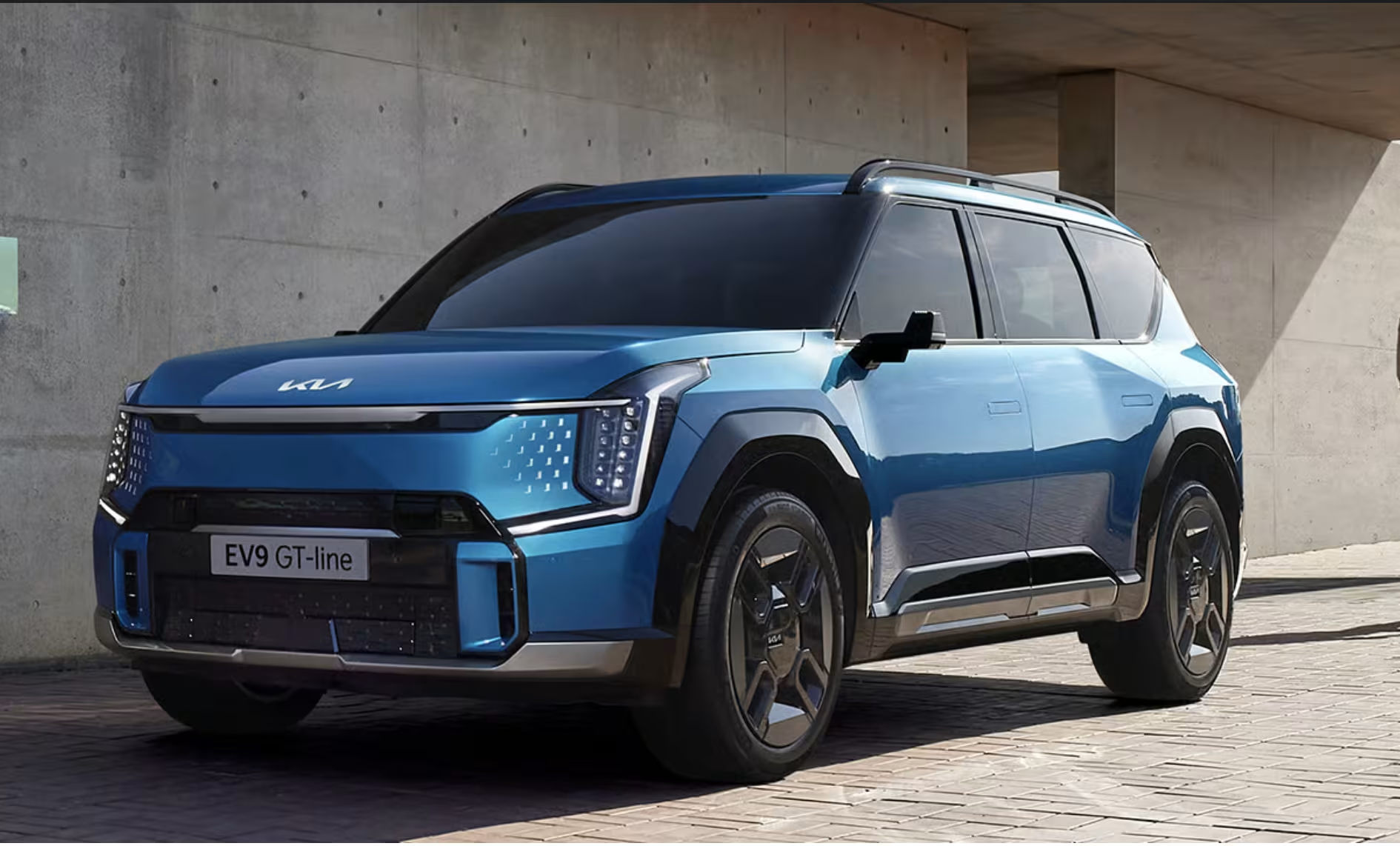
What's The Big News?
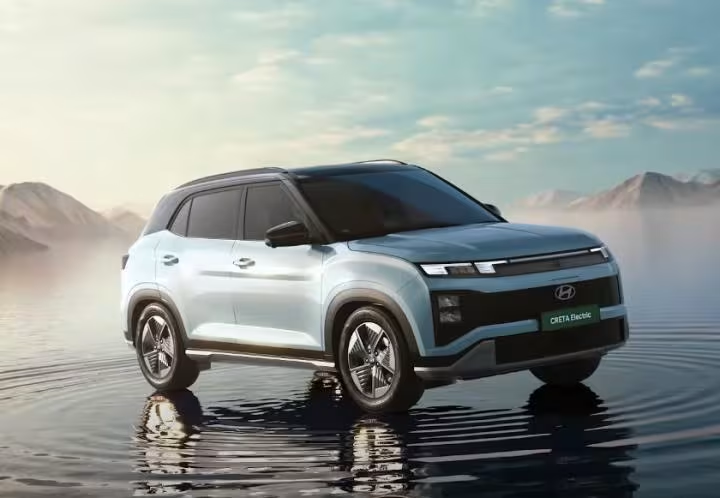
Think about the current EV market in India for a second. You either get budget-friendly electric hatchbacks with restricted city-only range, or you're forced to shell out big bucks for premium crossovers that can actually go the distance. Well, that compromise is about to end because the Korean giants, Hyundai and Kia, are working behind the scenes to bring their most affordable electric cars to our shores very soon.
We're talking about a massive claimed range of over 400 kilometers on a single charge. If they manage to price these right, it'll completely disrupt how the Indian middle class looks at electric mobility. You won't have to choose between range anxiety and your life savings anymore.
The localization strategy that makes this possible
Let's dive into how they plan to make this happen without pricing themselves out of the market. Developing a cheap EV isn't just about stripping out fancy features; it's about localized manufacturing. Hyundai and Kia are reportedly focusing heavily on localizing battery pack production in India (about time, honestly). By sourcing battery cells locally, they can bypass those heavy import duties that usually push EV prices into the stratosphere.
We expect these upcoming cars to be based on heavily localized platforms, potentially utilizing modified versions of their highly successful small SUV platforms. This means you won't just get a battery on wheels; you'll get a robust crossover designed to handle our notoriously broken roads. They'll likely pack in high-regen braking modes, smart connectivity features, and multiple drive profiles to squeeze every single kilometer out of that battery pack.
Why 400km is the magic number for Indian buyers
Range anxiety is real, and it's the biggest hurdle keeping petrolheads from going green. A 200km real-world range is fine for grocery runs, but the moment you plan a weekend trip from Delhi to Jaipur, you start sweating. A certified range of over 400km means you can comfortably get around 300 to 320km of real-world highway driving, even with the air conditioning running at full blast.
This puts these upcoming Korean EVs right in the sweet spot for family buyers who want a single-car garage. You won't need a secondary petrol vehicle for those occasional highway road trips anymore. Plus, Hyundai and Kia already have a stellar reputation for offering premium cabin designs, meaning these entry-level EVs will likely feel miles ahead of what we currently see in the sub-15 lakh electric segment.
Specs At A Glance
Since the official specification sheets are still under wraps, here's what we expect based on industry reports:
Parameters & Specs | Details & Expected Figures |
|---|---|
Expected Range | 400km+ (Claimed) |
Battery Pack | Lithium-ion (Localized production) |
Body Style | Compact SUV / Crossover |
Charging Time | DC Fast Charging support (TBA) |
Platform | Modified ICE-derived EV platform |
How Does It Stack Up Against The Competition?
Tata has been ruling the budget EV space with the punch-ev">Punch EV and nexon-ev">Nexon EV, but they've had their share of software glitches and service complaints. MG's Windsor EV offers a unique battery-as-a-service model, but its unconventional crossover-MPV styling isn't everyone's cup of tea. If Hyundai and Kia can offer their typical fuss-free ownership experience and stellar build quality, they might just steal the crown.
You'll also have to consider the upcoming Maruti eVX, which is slated for a release around the same time. However, Maruti's offering is expected to sit a segment higher. This leaves the entry-level space wide open for Hyundai and Kia to dominate if they play their cards right.
The Good And The Not-So-Good
What We Like
- Realistic 400km+ range means genuine highway usability for weekend road trips.
- Heavy localization will keep purchase costs and spare part prices in check.
- Hyundai and Kia's premium cabin quality and feature-loaded packaging.
- Robust service network spread across tier-1 and tier-2 Indian cities.
What Could Be Better
- Public fast-charging infrastructure in India is still lagging behind vehicle development.
- Initial pricing might still carry a slight premium over equivalent petrol compact SUVs.
Price & When You Can Buy It
While official pricing hasn't been locked down yet, these affordable EVs are expected to sit in the ₹12 lakh to ₹18 lakh bracket. This places them right against mid-to-high spec compact SUVs, making them highly accessible to the average car buyer. Launch timelines are yet to be officially announced, but industry whispers suggest we could see the first of these roll out sometime in late 2025 or early 2026.
Our Verdict
Here's the thing — if you've been holding off on buying an electric car because you're scared of getting stranded on the highway, your patience is about to pay off. Hyundai and Kia don't do half-baked products, and this massive push into localized, affordable EVs proves they are playing the long game. We feel this could be the exact tipping point that finally makes electric cars mainstream in India.