What's The Big News?
We've all been a bit wary of E20 fuel, haven't we? The government's push for 20% ethanol blending in petrol, aiming for a cleaner future and less reliance on imports, has been steadily rolling out across the country. But for many Indian car owners, especially those with premium vehicles, it's brought a fresh wave of anxiety. Is it good for my engine? Will it affect performance?
Now, here's where it gets interesting. Mercedes-Benz India, a brand synonymous with luxury and precision engineering, has just flagged something crucial. They're seeing a rise in customer queries about E20, sure, but their biggest concern? A significant chunk of these issues, they suspect, isn't about the ethanol blend itself. It's about something far more insidious: widespread fuel adulteration. Yes, really. It means what you're blaming on E20 might actually be unscrupulous fuel stations cutting corners.
E20 Fuel: Understanding the Blended Reality
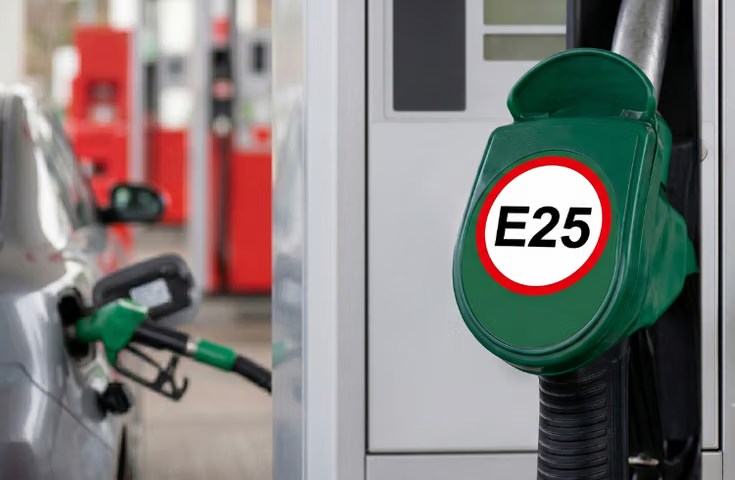
Let's rewind a bit to E20. This is simply petrol blended with 20% ethanol. The idea is to reduce emissions and our dependence on crude oil imports, which is a sensible goal for a country like ours. Car manufacturers have been gearing up for this, with most new vehicles being E20 compliant. But it’s natural to feel a bit nervous when you hear about a change in what powers your pride and joy, especially if you've saved up years for it. Will it reduce mileage? Will it harm engine components? These are valid concerns on every enthusiast's mind.
The Real Culprit? Mercedes Points to Fuel Adulteration
Here's the thing — Mercedes-Benz isn't just seeing a casual bump in queries; they're seeing specific performance issues that don't quite align with typical E20 effects. Think misfires, reduced power, or engine warning lights flashing up. And their seasoned engineers? They're increasingly pointing fingers at adulterated fuel. When you mix petrol with cheaper, often unregulated substances like kerosene or other solvents, it changes the fuel's properties drastically.
For a finely tuned, sophisticated engine like you find in a Mercedes, this isn't just a minor hiccup; it's a major problem. These engines are designed for very specific fuel parameters, and when you feed them something substandard, they react. It's like giving a gourmet chef cheap street food and expecting a Michelin-star meal. The engine's sensors detect the anomaly, struggle to compensate, and often, you get those dreaded warning lights. Many owners, understandably, jump to the conclusion that E20 is the culprit, when in fact, it's the impure stuff they're filling up with.
Specs At A Glance
Parameter | Detail |
|---|---|
E20 Fuel Composition | 20% Ethanol, 80% Petrol |
Purpose of E20 | Reduce emissions, decrease crude oil import dependence |
E20 Compatibility (Newer Cars) | Most models launched post-2023 are E20 compliant (manufacturer dependent) |
E20 Compatibility (Older Cars) | May require specific checks/modifications (consult OEM) |
Impact of Adulteration | Engine damage, reduced performance, warning lights, poor mileage |
How Does It Stack Up Against The Competition?
When we talk about 'competition' in this context, it isn't about one car versus another. It's about how our vehicles, from a humble commuter bike to a high-end luxury sedan, stand up against the variable fuel quality out there. A Mercedes, with its precise fuel injection systems and sophisticated engine management, is incredibly sensitive. It's built to run on fuel that meets international standards, not something mixed with dubious additives.
Compare that to, say, a simpler engine found in a budget hatchback. While adulterated fuel will still cause harm, the immediate symptoms might not be as pronounced, or perhaps the owner might attribute it to 'just how the car runs'. But make no mistake, prolonged use of poor quality fuel affects everything – fuel lines, injectors, catalytic converters – leading to costly repairs down the line for any vehicle. So, while luxury cars are sounding the alarm louder, this isn't just their problem; it's an Indian fuel problem affecting everyone.
The Good And The Not-So-Good
What We Like
- E20's environmental and economic goals for India.
- Mercedes-Benz India raising a critical, often overlooked, issue about fuel quality.
- Increased awareness among drivers to be more vigilant about what they put in their tanks.
What Could Be Better
- Stricter and more frequent checks on fuel quality at pumps nationwide.
- Better public awareness campaigns on identifying signs of fuel adulteration.
- Easier and more effective recourse for customers facing fuel quality issues.
- Greater transparency from fuel stations regarding their fuel sourcing and quality.
What This Means For You, The Indian Driver
So, what does all this mean for you, the person who spends their hard-earned money filling up their tank? First off, don't panic about E20 if your car is compatible. The bigger monster lurking is fuel adulteration. Always try to fill up at reputable, high-volume pumps. If you notice a sudden drop in mileage, unusual engine noises, or warning lights after a fill-up, consider the possibility of bad fuel. Keep your fuel receipts.
It's a tough situation because as consumers, we generally trust what comes out of the pump. But with luxury carmakers like Mercedes raising such strong concerns, it's a stark reminder that vigilance is key. It’s not just about the cost of the fuel; it’s about protecting an asset you've invested significantly in.
Our Verdict
Look, the E20 transition is a necessary step for India, and while there are valid questions about its long-term effects on some engines, Mercedes-Benz India's warning about fuel adulteration is a far more pressing concern for us. It's a silent killer for engines, eating away at performance and reliability, regardless of whether you drive a German luxury car or an Indian compact. Honestly, the government and oil companies need to step up their game on fuel quality checks significantly. We, as drivers, pay a premium for fuel, and we deserve to get what we pay for, unadulterated and pure. Let's hope this spotlight from a major manufacturer finally pushes for some real change at the ground level.