What's The Big News?
Alright folks, Arman here, and we've got some cracking news from the scooter world! June 2026 has been nothing short of spectacular for the Indian two-wheeler market, especially when it comes to our beloved scooters. The numbers are in, and they're showing a massive surge, proving that the convenience and affordability of scooters remain a top choice for millions across the country.
The top 10 best-selling scooters collectively moved a staggering 6,36,315 units last month, a whopping 38 percent jump from the same period last year. That's a serious number, and it tells us that not only is demand back with a bang, but buyers are also getting excited about the new options on the block. While the undisputed king, the Honda Activa, still sits comfortably on its throne, there's a new narrative brewing with electric scooters making significant inroads – and honestly, it shows!
Activa's Unshakeable Grip & The Market's Overall Health
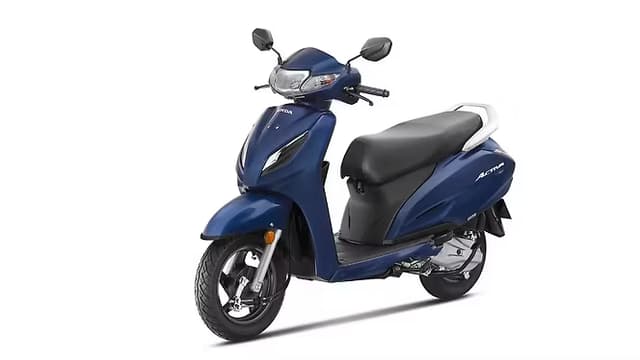
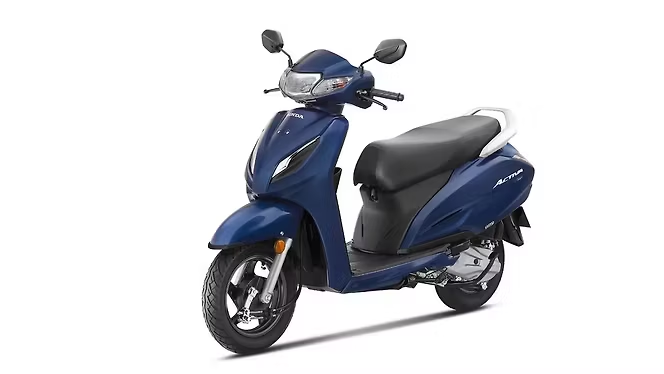
Look, let's be honest, talking about scooter sales in India without mentioning the Honda Activa is like talking about cricket without mentioning Sachin. It just doesn't happen. The Activa has once again proven why it's the undisputed champion, continuing its dominance with sales figures that leave its rivals playing catch-up. This scooter isn't just a vehicle; it's a household name, a trusty workhorse, and often the first choice for families getting their first two-wheeler.
Its consistent performance, widespread service network, and impressive reliability are factors that buyers simply can't ignore. For many, an Activa is a 'set it and forget it' purchase, a vehicle that just works. But beyond Activa's individual success, the overall market growth is what really catches our eye. A 38 percent year-on-year increase isn't just a good month; it's a clear indicator of strong consumer sentiment and an improving economic landscape. People are spending, and they're choosing scooters for their daily commutes, running errands, and even those short weekend trips. It's a healthy sign for the entire automotive sector, and it's fantastic to see.
The Electric Revolution Gains Serious Momentum
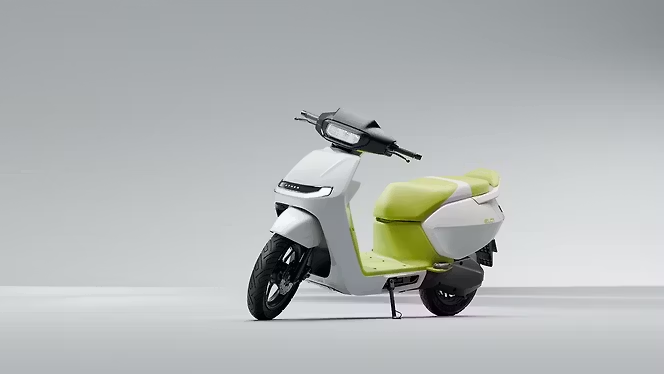
Here's the thing — while the Activa continues its reign, the real story brewing underneath is the electric scooter segment. We've been talking about EVs for years, but now they're not just a niche; they're becoming a formidable force. Players like the TVS iQube, Bajaj Chetak, and the relatively newer Ather Rizta have recorded *strong* year-on-year growth, signaling a clear shift in consumer preference towards sustainable mobility.
The iQube, especially, has been a consistent performer in the EV space, offering a practical, feature-rich package that appeals to a wide audience. Bajaj's Chetak brings that legacy brand trust to the electric game, while Ather's Rizta, with its focus on family-friendly design and usable range, seems to be hitting all the right notes with buyers looking for something fresh. These aren't just city commuters anymore; with improving range, charging infrastructure, and attractive government incentives, electric scooters are becoming a genuinely viable alternative for many. It's exciting to watch this segment mature, and you can bet other manufacturers are taking notice.
Key Sales Figures At A Glance
Model/Category | Status (June 2026) | YoY Growth Trend |
|---|---|---|
Honda Activa | Market Leader (Individual Model) | Continued Dominance |
TVS iQube | Top Performer (EV Segment) | Strong Growth |
Bajaj Chetak | Leading EV Player | Strong Growth |
Ather Rizta | Emerging EV Contender | Strong Growth |
Overall Top 10 Scooters | 6,36,315 units | 38% Increase |
How Does It Stack Up Against The Competition?
When you look at the big picture, the competition isn't just about who sells the most units anymore; it's about who's capturing the *future* market. The Activa, with its sheer volume, is in a league of its own, but its growth comes from maintaining its massive existing base and attracting traditional buyers. It's the benchmark for reliability and resale value, and that's a tough combination to beat for any petrol scooter.
However, the real fight is heating up in the electric space. The iQube is giving strong competition to rivals like the Ola S1 series (which wasn't specifically mentioned in this top 10 but is a significant player) by offering a more conventional scooter experience with an electric powertrain. The Chetak leverages Bajaj's brand equity, which is huge in India, especially for those who might be hesitant about newer EV brands. And the Rizta? It's carving out its own niche by focusing on practicality and comfort for families, something many other performance-oriented EVs sometimes miss. This diversified competition means more choices for you, the buyer, which is always a good thing!
The Good And The Not-So-Good
What We Like
- The overall 38% market growth is a fantastic sign for the industry and consumer confidence.
- Honda Activa's unwavering dominance proves its enduring appeal and reliability.
- The strong year-on-year growth of electric scooters like iQube, Chetak, and Rizta signals a healthy shift towards EVs.
- More diverse options in the market mean consumers have a wider range of choices, from traditional petrol to cutting-edge electric.
- The increasing acceptance of EVs indicates improving infrastructure and better product offerings.
What Could Be Better
- While Activa dominates, more innovation from petrol scooters in terms of features or efficiency would be welcome.
- Specific sales figures for individual EV models would provide a clearer picture of their market share against each other.
- Charging infrastructure, while improving, still needs to expand rapidly to fully support the burgeoning EV segment, especially in tier-2 and tier-3 cities.
- We'd love to see more affordable, yet quality, EV options to truly democratize electric mobility across all price points.
Price & When You Can Buy It
Since we're talking about sales of existing models, pricing for these scooters is pretty well established. The Honda Activa range typically starts from around ₹78,000 for its base variants and goes up to ₹85,000-₹90,000 (ex-showroom) for the higher-end models, depending on the city. It's that sweet spot pricing that makes it accessible to many.
For the electric contenders, the TVS iQube is usually in the ₹1.15 lakh to ₹1.5 lakh range, while the Bajaj Chetak hovers around ₹1.2 lakh to ₹1.5 lakh (all ex-showroom, factoring in FAME-II subsidies where applicable). The Ather Rizta is a newer entrant and its pricing is expected to be competitive, likely starting around ₹1.1 lakh and going up to ₹1.3 lakh or so, placing it squarely against its EV rivals. All these models are readily available across dealerships and online platforms, so if you're looking to buy, you can walk into a showroom today!
Our Verdict
Honestly, June 2026 was a strong statement from the Indian scooter market. It's a tale of two worlds: the enduring legacy of petrol scooters, led by the indomitable Activa, and the exciting, rapid ascent of electric models. While the Activa continues to be the sensible, reliable choice for countless buyers, the robust growth of the iQube, Chetak, and Rizta proves that Indian consumers are increasingly open to, and actively seeking, electric alternatives. We feel this dual growth is incredibly healthy for the market, offering a broader spectrum of choices than ever before. It's clear that whether you're looking for traditional reliability or futuristic sustainability, there's a scooter out there for you, and the market is only getting more exciting!