What's The Big News?
Alright folks, listen up. Big news from Delhi that’s going to impact how you fill up your tanks across India. The Central government has made a clear announcement: no more choices when it comes to ethanol-blended petrol. They’re ruling out offering pure petrol, E10, and E20 all at the same time.
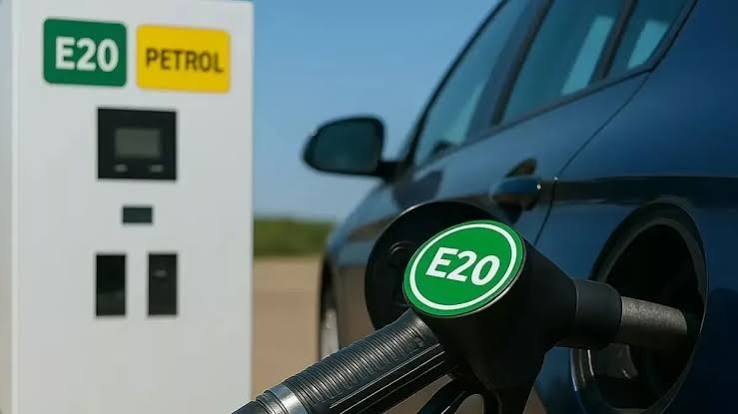
What does that mean for you? Well, simply put, E20 fuel – that’s 20% ethanol and 80% petrol – is going to be the standard across the nation. The Ministry of Petroleum and Natural Gas released a note on July 10, clearly stating that maintaining multiple grades of fuel just isn’t feasible due to increased costs and massive logistical headaches. So, if your car isn't E20-ready, you might want to start paying attention.
The E20 Push: What It Means For Your Car
Now, we’ve been talking about E20 for a while, but this announcement confirms it: the future is here, and it’s blended. For newer cars, especially those launched in the last couple of years, this isn’t a huge deal. Most manufacturers have already started making their engines E20 compliant, or at least E20-ready. You’ll find 'E20' stickers on newer models, or it'll be mentioned in the owner's manual.
But here’s the rub, and it’s a big one for many of you: what about your older cars? That trusty Alto, the hardworking Swift Dzire from 2015, or even your beloved Royal Enfield? Older engines, especially those not designed for higher ethanol blends, can face issues. Ethanol is corrosive and can affect rubber and plastic components in the fuel system over time. You might see a slight dip in mileage too, as ethanol has a lower energy content than pure petrol. Honestly, this is where the government needs to offer clearer guidance for owners of pre-E20 era vehicles.
Logistics & The Big Picture
From the government’s perspective, this move makes sense on paper. Imagine the chaos at your local petrol pump trying to manage three different grades of fuel – pure petrol, E10, and E20. It's not just about space; it's about separate storage tanks, dedicated pipelines, and strict quality control for each, which naturally pushes up operational costs for oil marketing companies.
Plus, the bigger picture here is about reducing India’s massive crude oil import bill and cutting down on carbon emissions. Ethanol is produced domestically, mainly from sugarcane, so it helps save foreign exchange and supports our farmers. It’s a strategic move for energy independence and environmental goals. We've seen similar shifts globally, and India's following suit.
Fuel Policy At A Glance
Here’s a quick breakdown of what the new fuel policy entails:
Feature | Detail |
|---|---|
Fuel Standard | E20 (20% Ethanol, 80% Petrol) |
Previous Options Phased Out | Pure Petrol, E10 |
Availability Target | Pan-India (phased implementation, full rollout generally targeting 2025) |
Policy Driver | Ministry of Petroleum and Natural Gas |
Announcement Date | July 10 |
How Does This Policy Stack Up?
When we talk about "stacking up," here, we're really looking at the policy choice itself. Is a blanket E20 mandate better than giving consumers a choice? From the government's standpoint, it clearly streamlines things. Reduced import dependence, clearer environmental targets, and simpler logistics for fuel stations – it's a win on those fronts.
However, for the average Indian car owner, especially those with older vehicles, it’s a different story. If you've been meticulously maintaining your car from 2012, suddenly having only E20 available means a potential headache. Other countries, when transitioning, have sometimes offered premium non-ethanol fuels for a period or have had more gradual rollouts with multiple options. India’s approach is more direct, almost a clean break. While it avoids confusion at the pump for the long term, it does put the onus squarely on consumers and older vehicle owners to adapt, or potentially, upgrade.
The Good And The Not-So-Good
What We Like
- Environmental Benefits: Lower carbon emissions, a step towards cleaner air.
- Reduced Import Bill: Less reliance on crude oil imports, strengthening our economy.
- Simplified Logistics: Easier for fuel stations to manage a single standard.
- Boost for Farmers: Increased demand for sugarcane for ethanol production.
What Could Be Better
- Impact on Older Vehicles: Potential compatibility issues and increased wear for non-E20 compliant cars and bikes.
- No Consumer Choice: Drivers lose the option to choose pure petrol or lower blends.
- Potential Mileage Dip: Ethanol has lower energy density, which could lead to slightly reduced fuel efficiency.
- Clarity for Existing Owners: More information and support needed for owners of older vehicles on how to manage this transition.
Price & When You Can Buy It
Now, about the price – generally, ethanol is cheaper than petrol. So, in theory, E20 fuel should be marginally cheaper at the pump than pure petrol would be. How much cheaper? That depends on government taxation and oil company margins, but don't expect a massive drop. It'll be a subtle difference.
As for "when you can buy it," E20 is already available at some pumps, especially in major cities. The goal, as per the government's roadmap, is for a pan-India rollout. This latest announcement simply cements that this will be the only option once the full transition is complete. So, expect to see E20 as your primary choice sooner rather than later, with the complete phase-out of pure petrol and E10 happening progressively.
Our Verdict
This E20 mandate is a classic example of a policy that's great for the nation’s long-term energy and environmental goals, but it comes with its own set of challenges for the individual consumer. For new car buyers, it’s a non-issue; your vehicle is likely ready. But for the lakhs of us still driving cars and bikes from a decade ago, it's something to think about seriously. Honestly, while the environmental and economic benefits are clear, I believe the government could do more to educate and support owners of older, non-compliant vehicles. It's a big shift, and while necessary, it needs to be managed with a bit more empathy for the common man who just wants to keep his beloved machine running without a hitch.