
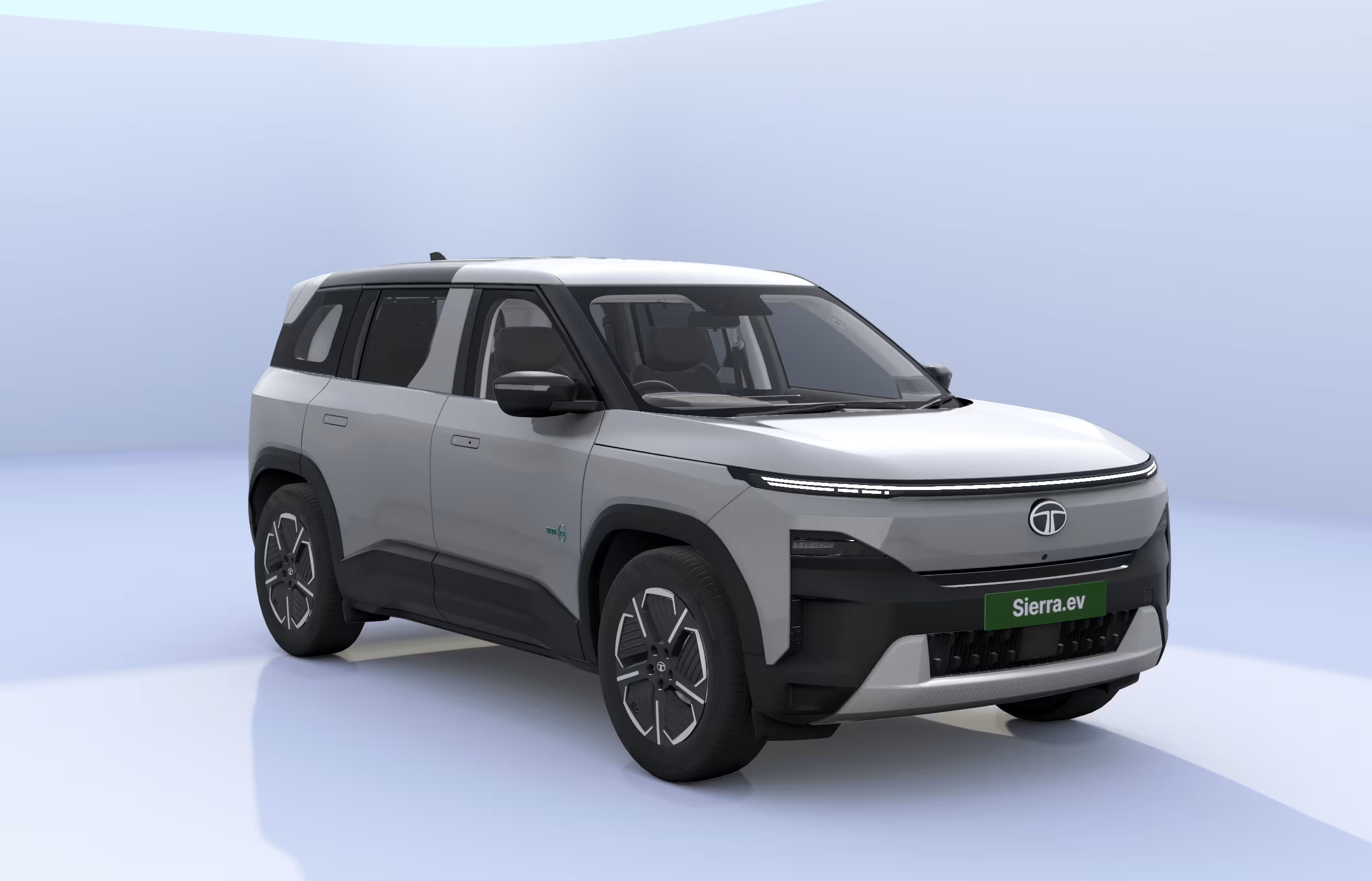
What's The Big News?
If you grew up in the 90s, you know the Tata Sierra wasn't just a car. It was an emotion, a status symbol with that massive curved rear glass that made rear passengers feel like they were lounging in a helicopter. Now, Tata is bringing it back from the dead, but this time, there's no noisy diesel engine under the hood. It's coming as a pure electric SUV, and Tata is throwing absolutely everything they have into its development.
Forget about simple platform sharing. Tata is calling the Sierra EV its most advanced electric vehicle to date, backed by a mind-boggling 15 billion kilometers of real-world driving data collected from their existing EV fleet. That's like driving to the moon and back thousands of times, and all that wisdom is being packed into this single SUV.
The Secret Sauce: Custom Tuning Over Copy-Paste
You might think that because the Sierra EV shares its advanced Acti.ev platform with the upcoming harrier-ev">Harrier EV, they'll drive exactly the same. That's where you'd be wrong. Tata's engineering team is giving the Sierra its own unique identity, specifically tuning the suspension and ride setup to offer a plush, lounge-like experience. It's designed to glide over our broken city roads rather than attack corners at breakneck speeds.
We're also looking at distinct software calibrations. This isn't just about how fast the car accelerates; it's about how smoothly the power flows. The throttle response is being mapped to prevent that sudden, jerky EV lurch that makes your family feel carsick. It's all about refinement here, making it feel like a premium living room on wheels rather than a hopped-up hatchback.
Fifteen Billion Kilometers: Why This Data Matters To You
Let's talk about that massive 15-billion-kilometer figure because it's not just a marketing gimmick. Tata has been selling EVs in India longer than almost anyone else, starting from the early tigor-ev">Tigor EV to the wildly successful nexon-ev">Nexon EV and punch-ev">Punch EV. Every single pothole hit, every hot summer day in Delhi traffic, and every monsoon flood in Mumbai has sent valuable data back to Tata's R&D centers.
This wealth of information means the Sierra EV will get incredibly smart battery management systems. We've seen how extreme Indian summers can degrade EV batteries and kill range. By analyzing real-world usage, Tata has developed algorithms that pre-cool the battery pack more efficiently and manage power usage when you're stuck in bumper-to-bumper traffic (yes, really). It's the kind of practical engineering that you only get from years of hard-earned experience on Indian roads.
Specs At A Glance
While the final production specifications are still under wraps, here's what we know based on the Acti.ev platform architecture:
| Parameter | Expected Details |
|---|---|
| Platform | Acti.ev Architecture |
| Battery Capacity | TBA (Expected 60kWh to 80kWh) |
| Driving Range | TBA (Expected 500+ km on a single charge) |
| Drivetrain Options | Front-Wheel Drive / All-Wheel Drive (AWD) |
| Seating Capacity | 4-seater Lounge Concept / 5-seater Standard |
How Does It Stack Up Against The Competition?
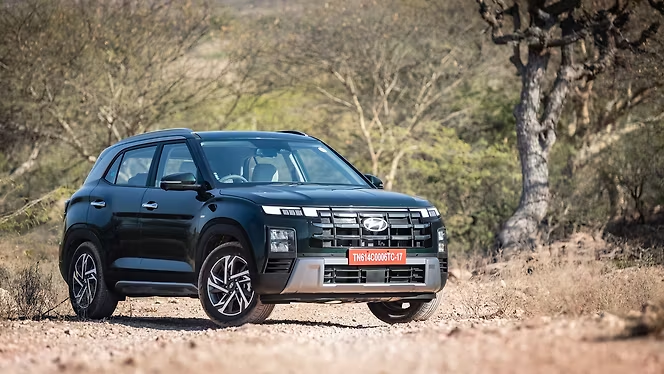
When it launches, the Sierra EV won't have an easy ride. It will go head-to-head with some serious heavyweights. The most obvious threat is the Hyundai Creta EV, which is expected to bring Hyundai's signature feature-loaded cabin and bulletproof reliability to the table. While the Creta EV will likely appeal to the mass market, the Sierra EV will play on its unique heritage and massive road presence.
Then there's the Mahindra BE.05, a futuristic electric SUV designed to turn heads with sharp, aggressive styling. Mahindra's EV will likely focus on sporty performance, whereas Tata is positioning the Sierra as a sophisticated, comfortable cruiser. If you want raw speed, the Mahindra might tempt you, but if you value rear-seat comfort and a calm cabin, the Sierra EV looks like the stronger contender.
The Good And The Not-So-Good
What We Like
- The iconic, nostalgic design with a modern, futuristic twist.
- Plush, custom-tuned suspension aimed at maximum ride comfort.
- Smarter battery and thermal management systems built on massive Indian driving data.
- Lounge-like seating options that will redefine rear-seat luxury in this segment.
What Could Be Better
- Pricing could easily touch premium territory, making it out of reach for budget buyers.
- Tata's software infotainment systems have historically been buggy, and we hope they iron out these issues before launch.
Price & When You Can Buy It
Tata has been tight-lipped about the exact launch timeline, but industry rumors suggest we could see the production-ready Sierra EV in showrooms by late 2025 or early 2026. Because it sits on the premium Acti.ev platform and offers high-end features, pricing will be announced closer to launch. However, we expect it to be positioned in the ₹25 lakh to ₹35 lakh bracket, depending on the battery size and whether you opt for the dual-motor AWD variant.
Our Verdict
Recreating an icon is always a risky business because nostalgic fans are incredibly hard to please. Tata seems to understand this pressure, which is why they aren't just selling a retro body style; they're packing it with their most sophisticated technology yet.
Look, if you're waiting for a cheap electric runabout to replace your CNG hatchback, this isn't it. But if you want a premium, comfortable electric SUV that stands out in a sea of boring, identical-looking crossovers, the Sierra EV might just be worth the wait. It represents everything Tata has learned over a decade of building EVs for Indian roads, and that alone makes it incredibly exciting.