
What's The Big News?
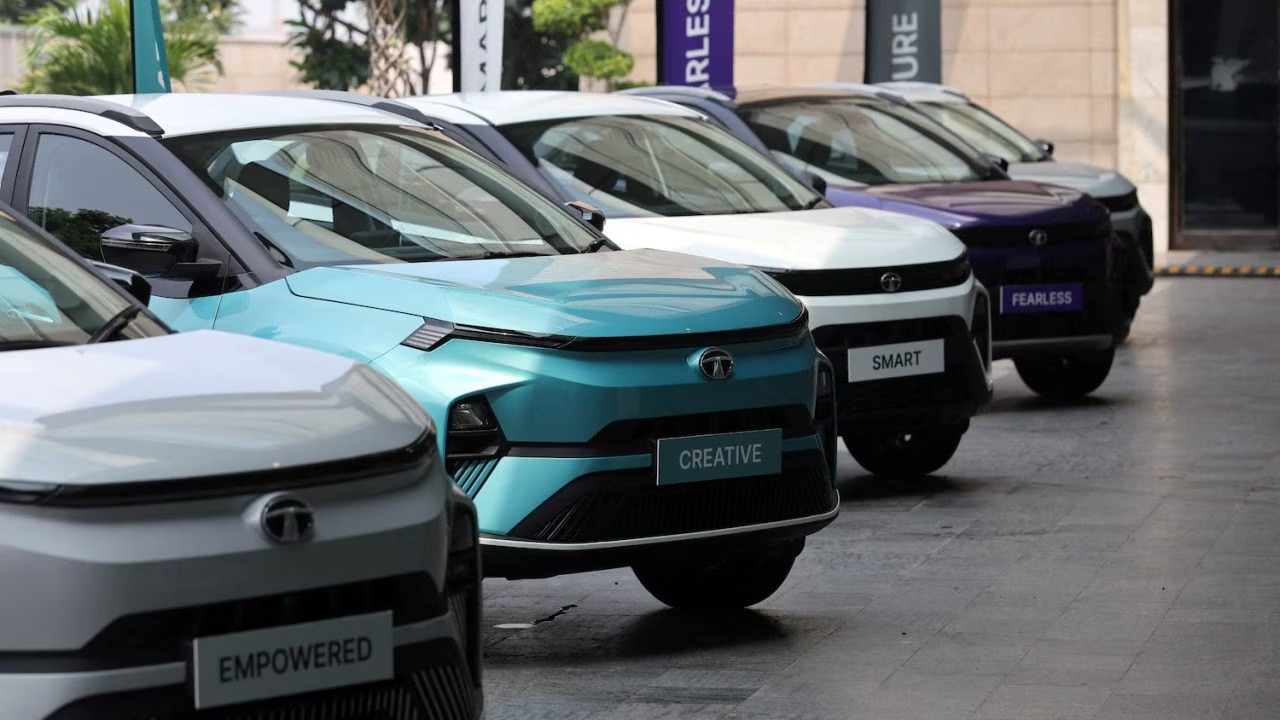
Hold onto your seats, folks! Tata Motors, a brand that's really turned things around in the last few years, just threw down a gauntlet. Their Chairman, N Chandrasekaran, recently told dealers that the company is gunning for a whopping 20% share of the Indian passenger vehicle market by 2030. That's right, one in every five cars sold in India, they want it to be a Tata.
Now, this isn't just some board meeting fluff. This is an ambitious, no-holds-barred statement from the top, signalling Tata's aggressive intent in a market that's only going to get bigger and more competitive. From their current standing of around 14-15%, making that jump means some serious strategic shifts, new products, and a relentless focus on what the Indian buyer truly wants. It's a bold move, and honestly, it shows their confidence.
Tata's Ambitious 2030 Vision: More Than Just Numbers
Hitting a 20% market share by 2030 isn't just about selling more cars; it's about reshaping the entire perception of the Tata brand. We've already seen their incredible transformation from a utility-focused brand to one known for safety, design, and now, electric vehicles. This new target means they plan to accelerate that transformation tenfold.
How do they plan to do it? It's a multi-pronged approach, but the core seems to revolve around expanding their product portfolio significantly. Think more SUVs across various price points, potentially new segments we haven't seen them in, and of course, a relentless push in the electric vehicle space. They're not just playing catch-up anymore; they're setting the pace, especially with EVs. They've also been investing heavily in manufacturing efficiency and customer experience, which frankly, was an area where they used to lag behind rivals like Maruti and Hyundai. If they can nail that consistent quality and service, they’ll be unstoppable.
Look, for years, the Indian market was dominated by a couple of players. Tata's resurgence, driven by products like the Nexon, Punch, and Altroz, has genuinely shaken things up. Their commitment to safety, often scoring 5-star GNCAP ratings, has really resonated with buyers who are now increasingly conscious about protecting their families. This 20% goal isn't just a number; it's a commitment to bringing even better, safer, and more advanced vehicles to the Indian roads, perhaps even challenging Maruti's long-held stronghold in the hatchback and compact SUV segments.
The EV Push: The Game Changer?
If you ask me what's going to be the biggest accelerator for Tata's 2030 vision, it's undeniably their electric vehicle strategy. They've been the undisputed leaders in India's EV segment, hands down. The Nexon EV and the tiago-ev">Tiago EV have been runaway successes, making EVs accessible to a much broader audience than anyone thought possible just a few years ago. We're talking about a significant lead here, something their rivals are scrambling to catch up to.
This isn't just about having a few models; it's about building an entire ecosystem. Tata Passenger Electric Mobility (TPEM) is working on dedicated EV architectures, new battery technologies, and even pushing for better charging infrastructure through their sister company, Tata Power. We're expecting a flurry of new EV launches in the coming years, including the production versions of the Curvv and harrier-ev">Harrier EV concepts, which look absolutely smashing (yes, really). While others, especially Maruti, are still dipping their toes in the EV waters, Tata's already swimming laps.
Of course, it's not without its challenges. The charging infrastructure, though improving, still needs a massive boost across the country. And the initial cost of EVs, despite subsidies, remains a hurdle for many. But with battery prices steadily declining and Tata's continued focus on democratizing EV technology, they're in a prime position to capitalize on India's inevitable shift towards electric mobility. They've effectively created their own segment, and that's a huge advantage.
Specs At A Glance
Since we're talking about a corporate strategy rather than a specific vehicle, traditional "specs" don't quite fit. However, here’s a look at the key metrics and drivers behind Tata's ambitious plan:
Metric/Focus Area | Details |
|---|---|
Current Market Share (Passenger Vehicles) | ~14-15% (estimated) |
2030 Market Share Target | 20% |
Key Growth Driver 1 | Electric Vehicles (EVs) |
Key Growth Driver 2 | SUV/Crossover Segment Expansion |
Strategic Pillars | Product portfolio, customer experience, safety, design, sustainable mobility |
Expected Product Launches | New EV models, ICE models across various segments |
How Does It Stack Up Against The Competition?
This 20% target puts Tata directly in the crosshairs of the traditional market leaders: Maruti Suzuki and Hyundai. Maruti, with its massive sales network and unmatched fuel efficiency, still holds the lion's share, especially in the budget and mid-range segments. Hyundai, on the other hand, brings in premium features, global designs, and a strong brand appeal. Tata isn't just aiming to be a strong third player; they're aiming to be a genuine challenger for the top spot.
Maruti's got its hands full protecting its turf, but their EV strategy is still in its nascent stages. This is where Tata has a clear head start. Hyundai, while having a few strong EV contenders globally, hasn't quite managed to replicate Tata's success in India's budget EV space yet. Mahindra is another strong contender, especially in SUVs and with their new XUV.e and BE EV lineup, but again, Tata has a lead that's hard to ignore.
In my opinion, Tata's biggest advantage isn't just product; it's their understanding of the Indian consumer's evolving needs – safety, technology, and now, sustainable mobility. They're building a brand that's genuinely 'Made in India' and resonating with a new generation of buyers who value these aspects over just outright cost or mileage. The competition will be fierce, but Tata's showing they're ready for the fight.
The Good And The Not-So-Good
What We Like
- Bold, Visionary Leadership: Setting such an ambitious target signals clear intent and confidence.
- Unmatched EV Leadership: Tata's head start in the electric vehicle segment is a massive strategic advantage.
- Focus on Safety: Consistently delivering 5-star GNCAP rated cars is a huge plus for Indian families.
- Improved Design & Features: Modern designs and feature-rich interiors have transformed their appeal.
- Strong Product Pipeline: Expecting a flurry of new and updated models, especially in the EV space.
What Could Be Better
- Service Network Expansion: While improving, consistency and reach of their service network still needs to grow to match rivals.
- Fit and Finish Consistency: Minor panel gaps or interior plastic quality can sometimes be a mixed bag across models/batches.
- After-Sales Experience: Some customers still report issues, which needs continuous refinement to match premium expectations.
- Aggressive Competition: Maruti and Hyundai won't sit idle; maintaining momentum in a competitive market is tough.
- Pricing Strategy: Need to ensure future products remain competitively priced without compromising quality.
Price & When You Can Buy It
This isn't about a single product launch, so there's no immediate "price" or "buy date" in the traditional sense. Instead, Tata's 2030 vision means you can expect a continuous stream of new and updated vehicles hitting the market over the next seven years. These will span various segments, from updated compact SUVs to brand-new electric vehicles, all designed to help them reach that 20% market share goal.
Pricing for these future models will, of course, be announced closer to their respective launches. However, given Tata's strategy of offering compelling value, often packed with features and safety not seen at that price point, we can anticipate competitive pricing across their upcoming lineup. The aim isn't just to make premium cars, but to democratize advanced technology and safety for the Indian buyer.
Our Verdict
Tata Motors setting a target of 20% market share by 2030 is nothing short of audacious, especially in a market as competitive and dynamic as India's. It's a goal that will require relentless innovation, strategic product planning, and an unwavering focus on customer satisfaction. But if any Indian automaker can pull it off, it's Tata. Their journey from the Indica days to the modern-day Altroz and Nexon has shown what's possible with a clear vision and execution.
Honestly, Tata's transformation over the past few years has been nothing short of remarkable, and this 20% target just solidifies their intent to be a dominant force. For us, the Indian consumer, this means even more choice, better products, and a healthier competitive environment. It's an exciting time to be buying a car in India, and Tata is definitely going to be a major player in shaping that future. Get ready for some serious action on the roads!