
What's The Big News?
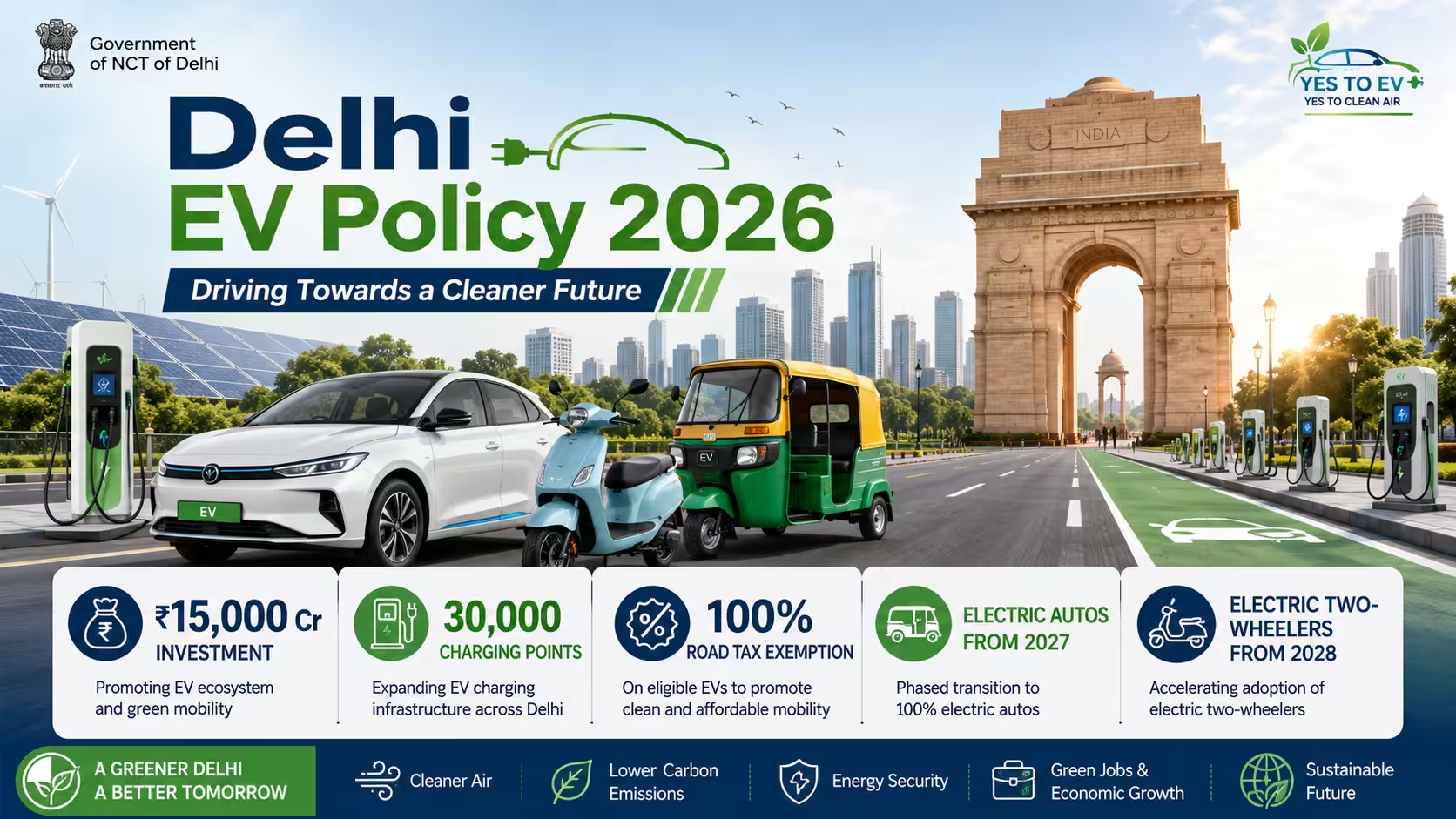
Delhi has just approved its highly anticipated EV Policy 2026. This isn't just a regular government update on paper; it's going to actively change how you buy your next set of wheels in the National Capital Region. If you've been keeping an eye on how electric vehicles are taking over our roads, you'll know that Delhi was one of the early adopters that pushed hard with aggressive subsidies. Now, they've set their sights on the next phase, and it's looking like a massive shake-up for both private buyers and commercial fleet operators.
Whether you're looking to swap your noisy old petrol scooter for a sleek electric one or planning to park a shiny new electric SUV in your driveway, this policy is the blueprint for the next phase of Delhi's green transition. The government wants to make sure that the momentum built over the last few years doesn't fade away. They're aiming high, trying to make Delhi the undisputed EV capital of India. But as with any policy, the devil is always in the details, and we need to look closely at what is changing for the average buyer who just wants a hassle-free daily commute.
The Big Push: What Changes For Car And Two-Wheeler Buyers?
Let's talk about the shift. The first policy did wonders for initial adoption, bringing electric cars down to more approachable entry points. Today, you can get decent electric hatchbacks for the price of a mid-spec Swift, and this policy wants to make running them even cheaper. However, the 2026 policy shifts focus. It's not just about throwing direct cash discounts at buyers anymore. Instead, they're looking at a holistic ecosystem. Think better charging infrastructure, structured recycling, and strict mandates for commercial players.
Instead of just giving upfront cash cuts, the government is focusing on creating an environment where owning an EV doesn't feel like a compromise. If you're a regular buyer, you'll see a massive push towards making public charging as seamless as refueling at a petrol pump. We've all heard stories of people getting stranded because a public charger was out of order, and the new policy aims to fix these exact pain points by enforcing stricter maintenance rules on charging providers.
Subsidies might get rationalized as the market matures. Gone are the days of blind cash drops for every single vehicle. Now, the government wants to target specific segments that need the boost most—like delivery fleets and public transport—while ensuring private buyers get solid infrastructure support. It's a pragmatic move (and honestly, it shows) how much they want to clean up Delhi's infamous winter air without running out of budget.
The Fleet Electrification Focus and Charging Network
Commercial vehicles are getting the heaviest push here. Delivery giants, cab aggregators, and three-wheelers are being pushed hard to go 100% electric. If you're someone who uses ride-sharing apps daily, you'll soon find almost every ride turning silent. The policy sets strict timelines for these fleets to transition, which means the commercial demand for EVs is about to skyrocket. This will naturally help manufacturers scale up production, which eventually brings down costs for private buyers like you and me.
Charging is the real elephant in the room. You can't expect someone to buy an EV if they're constantly worrying about running out of juice mid-way. The 2026 policy prioritizes setting up semi-public charging stations in residential areas, apartment complexes, and local markets. Imagine charging your car while shopping for groceries, without hunting for a massive commercial charging hub. That's the level of convenience they're targeting, which is exactly what we need to see across India.
Specs At A Glance
Focus Area | Expected Benefits | Target Audience |
|---|---|---|
Charging Infrastructure | Massive expansion of residential and public chargers | All EV Owners |
Fleet Electrification | Mandatory transition for aggregators and delivery portals | Commercial Operators |
Registration & Road Tax | Expected continuation of waivers to keep costs low | Private & Commercial Buyers |
Scrappage Incentives | Bonus benefits when swapping old ICE vehicles for EVs | Existing ICE Vehicle Owners |
How Does It Stack Up Against The Competition?
Delhi has always been a pioneer with early road tax waivers and direct subsidies, making it one of the cheapest places in India to register an electric vehicle. When you compare this to other major states like Maharashtra or Karnataka, Delhi's approach is far more consumer-centric. Maharashtra offers great early-bird incentives, but Delhi's focus on charging infrastructure density is what sets it apart. Karnataka, the EV startup hub, focuses heavily on manufacturing incentives, but Delhi remains the king of consumer-centric push.
Uttar Pradesh and Haryana have also introduced their own EV policies recently, offering tempting tax exemptions. However, Delhi's compact geography makes it the perfect breeding ground for a dense charging network. While neighboring states are still trying to figure out highway charging, Delhi is focusing on micro-charging networks inside residential colonies, which is far more useful for daily commuters.
The Good And The Not-So-Good
What We Like
- Heavy focus on expanding the charging network in residential areas and local markets.
- Structured transition for commercial fleets and gig workers to reduce city pollution.
- Expected continuation of road tax and registration fee waivers.
- Focus on battery recycling and circular economy to prevent future toxic waste issues.
What Could Be Better
- Direct subsidies for private electric cars might see a reduction as the market matures.
- Implementation speed at the municipal level has historically been sluggish.
- Lack of clear retrofitting incentives for older petrol/diesel cars that owners want to convert.
Price & When You Can Buy It
Cabinet approval has been officially granted, meaning the policy is set to roll out in phases over the coming months. For buyers, this means the new guidelines, potential road tax updates, and charging mandates will apply to all new vehicle registrations starting late 2024 or early 2025 as the transition begins. If you're looking to buy an EV, keeping an eye on the official gazette notification will save you a lot of paperwork and money.
Our Verdict
Look, if you've been sitting on the fence waiting for the perfect time to buy an EV in Delhi, this is your cue. While the era of massive direct cash discounts might be slowly winding down, the massive push for charging infrastructure makes owning an electric car or scooter incredibly practical. We feel that this policy transition is exactly what the city needs to move from an experimental EV phase into a mature, everyday electric ecosystem. It's a smart, calculated move that prioritizes usability over marketing gimmicks.